Chapter 2: We Were Kids
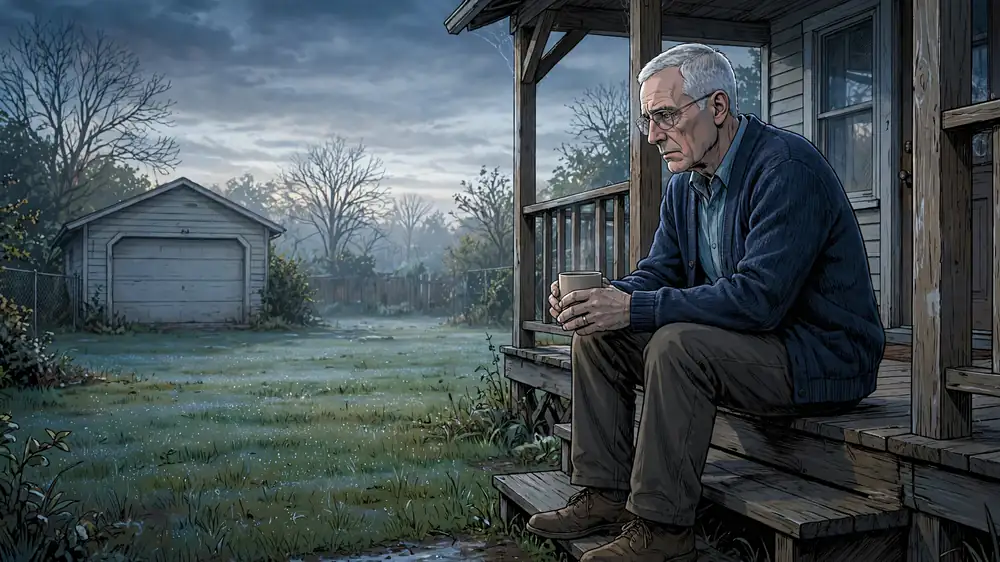
I don’t remember standing up. I remember the back porch, the cold boards under my socks, and the sky going from black to gray over the Shepherds’ garage.
I didn’t sleep. I sat on the steps with a mug of coffee that went cold in my hands and replayed thirty-seven years of Ray.
Ray at my bachelor party, crying when I told him he was my brother. Ray handing me the ring at the altar. Ray in the waiting room when Beth was born, wearing a cigar he’d never light. Ray helping me move my mother into the nursing home. Ray, three weeks ago, gray and thin in the hospice bed, grabbing my wrist and saying, Tommy. There’s something I should’ve…
And then the nurse came in, and he never finished.
I’d thought he meant the money he’d borrowed in ’04. I’d told him to forget it.
At six-fifteen, Diane came out in her lavender sweater with a fresh cup. She set it beside me on the step and didn’t touch me.
“I’m not going to apologize for the past thirty-five years,” she said quietly. “I’ll apologize for 1989 until the day I die. But not for our life. Our life was real.”
“Was it?”
“Tom.” She sat down on the step above me. “We were kids. We weren’t engaged. We weren’t married. We’d been together four months, and you’d told me yourself you weren’t sure you wanted anything serious until you had a job. It was a mistake two lonely twenty-somethings made before our life even started. It’s ancient history.”
Ancient history. She knew exactly what she was saying to a history teacher. Maybe she didn’t. Maybe it was just the phrase people use.
“I taught ancient history for thirty-one years,” I said. “You know what I told those kids? That it’s the foundation. Everything that came after is built on it. You don’t get to call the foundation irrelevant because you’re standing on the second floor.”
She flinched.
Beth called at eight. Diane had told her. Of course Diane had told her; she’d always been closer to Beth.
“Dad.” My daughter’s voice was gentle in the way it gets with her own kids. “Mom’s a wreck. I know this is awful. But it was thirty-seven years ago. Before you were even engaged. Mom has been nothing but good to you. Is this really worth blowing up everything?”
“I don’t know yet, honey.”
“She told you herself. She didn’t have to. Doesn’t that count for something?”
It did. That was the worst part. It counted for something, and I couldn’t figure out how much.
My son Michael called an hour later and said only, “Dad, whatever you decide, I’m with you.” Then he was quiet a long time and said, “Uncle Ray, though. Jesus.”
That afternoon I drove to the hardware store just to be somewhere else. I walked up and down the paint aisle for forty minutes. A kid in an orange apron asked if I needed help, and I almost laughed.
I was sitting in the parking lot with the engine off when my phone rang.
Linda Dillard.
Ray’s widow. We’d hugged at the graveside twenty-four hours ago. She’d whispered He loved you so much, Tom into my shoulder.
I answered. Her voice was flat and strange.
“Tom. Has Diane talked to you?”
I closed my eyes. “Last night.”
“I thought she might. After the service.” A long breath. “Did she tell you everything? Did she tell you about the letters?”
“What letters?”
Linda was quiet so long I thought the call had dropped.
“I’m coming over,” she said. “Not to your house. Meet me at the Bob Evans on Wilmington. I found a shoebox in Ray’s closet when I was looking for his good tie. You need to see what’s in it before you decide anything.”