Chapter 5: The Acorn Jar
Sheryl said, “That’s not necessary.”
Dennis said, “I think it is,” and plugged my phone into the clubhouse TV with the cable he’d brought from home.
I’d picked out four clips. Dennis played them in order, the volume all the way up.
Sheryl walking into my yard with her clipboard. “Gus? Sheryl Pratt. HOA president.”
“She signed off. Just get it down before Thursday.”
“Why Thursday?”
“That’s when she’s back.”
Then Gloria in her bathrobe on the sidewalk, saying “She’s in Colorado, she doesn’t know,” and Sheryl taking her by the elbow and walking her home.
Then the last one. The top of the oak coming down, the whole picture shaking, and Sheryl on my lawn, sipping an iced coffee, watching it fall.
Nobody said anything when it ended. The TV just showed my front yard, empty, on a sunny Tuesday.
Then Gloria, in the front row, said very clearly, “Well, I voted for her,” and the whole room laughed the way people laugh at a funeral, because they can’t help it.
Sheryl stood up. “This is a private board matter. This meeting is not properly—”
“It’s properly called,” Dennis said. “I have thirty-one signatures. Now forty-four.” Someone at the back was passing the petition down the rows.
The motion to remove Sheryl Pratt as president passed fifty-three to two. I don’t know who the other vote was.
The second motion took longer, because people were scared. Dennis explained it in his calm accountant’s voice. The insurance would not pay. The HOA was on the hook. Unless the HOA sued the person who had forged two board members’ signatures and paid for the crime with the community’s money.
It passed fifty-one to four.
Sheryl walked out before the count was read. She left her clipboard on the table. Dennis put it in an evidence bag he’d brought from home. He’d thought of everything.
It took seven months.
Sheryl hired a lawyer, then a second lawyer when the first one watched the video. Her own homeowner’s insurance denied her too, for the same reason the HOA’s had: you can’t insure a fraud. The district attorney charged her with forgery. She pleaded to a misdemeanor and paid restitution to Gus Keller, who’d been sued by nobody, because I made sure of it.
She settled with me in May. One hundred and fifty-six thousand dollars, plus Nadia’s fees. She settled with the HOA in June, for the reserve money, the assessment, and the legal costs.
She didn’t have it. Not in cash.
The FOR SALE sign went up on her beige lawn in July. A young couple with a baby bought the house. They have a golden retriever named Pancake. The first week, they knocked on my door and asked if I knew a good place to get a tree for their backyard.
Here is the part I want to be honest about.
The special assessment got refunded, but not all of it, and not fast. For three months, Gloria and the Lindqvists and forty other families paid fourteen hundred dollars each for something one woman did. Some of them wrote to me afterward and said they were sorry they’d blamed me. Some of them didn’t. One man stopped me at the mailbox and said, “You know, if you’d just let it go, none of us would’ve paid a dime.”
He’s not wrong. He’s not right, either.
“We didn’t vote,” Gloria told me, the day her refund check came. “Most of us. That’s what we paid for. Fourteen hundred dollars’ worth of not showing up.” She folded the check in half. “Cheaper than a tree.”
I voted in the next election. So did forty-eight other people. Dennis is president now. He sends out a monthly budget that nobody reads, and that’s how you know it’s working.
In October, a year to the day after Sheryl stood on my sidewalk with her third notice, I took the mason jar of acorns off my porch.
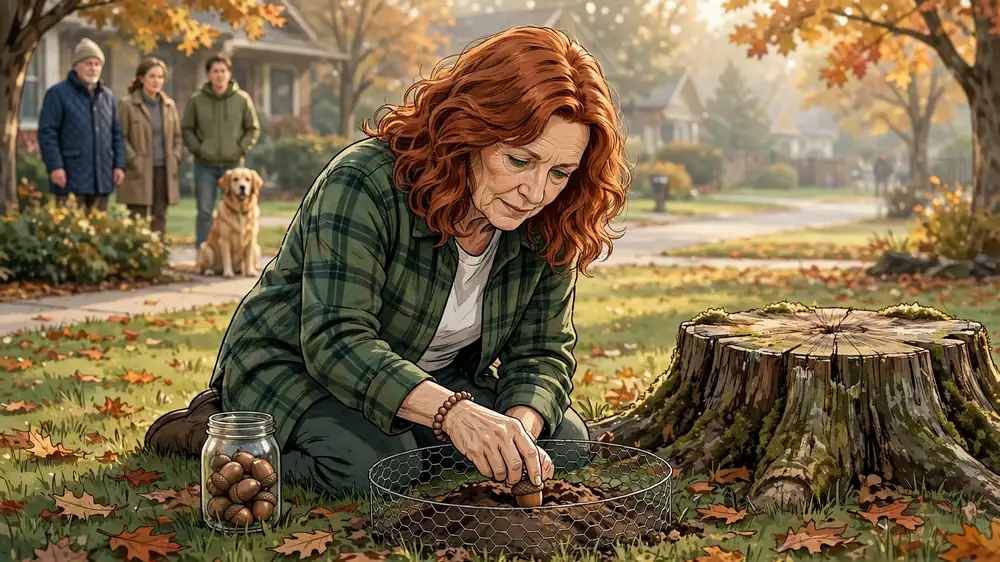
I’d saved them, sawdust and all. Walt Brennan had told me white oak acorns from a healthy parent tree had a good chance. I picked the fattest one and planted it three feet from the stump, in a ring of chicken wire, the way the elementary kids do with their paper cups.
Gloria came out in her church coat and watched. So did the young couple next door, and Pancake.
“How long until it’s big?” the new neighbor asked.
“About a hundred years,” I said.
She laughed. I didn’t.
I’ll be gone long before then. So will everyone who stood in that clubhouse.
But somebody will sit in its shade someday and not know any of this. And that’s all a tree ever asks of you.
To leave it alone long enough to grow.