Chapter 2: The Receipt
Her name was Eleanor.
I read every article I could find, sitting in my car until the sun came up over the parking lot.
Eleanor Rose Halloway, born June 3rd, 1999, at Mercy Bay Hospital in San Diego. Seven pounds, two ounces. Dark-red hair even at birth, the nurses said. Six days later, at some point between 3 and 4 a.m., she vanished from the nursery. No cameras in those days. No ransom call. A nurse’s aide was questioned and released. The case went cold in 2003.
Her parents, Charles and Helen Halloway, never stopped looking. Every year on June 3rd, they ran a full-page ad in the San Diego Union-Tribune: a photo of a newborn in a pink knit cap, and a single line. We are still here, Eleanor.
My birthday is the date the Dempseys picked when they “adopted” me. July 15th. Six weeks after June 3rd.
My aunt Darlene had been a nurse in San Diego in 1999.
I didn’t go home that morning. I went to the storage unit off Ming Avenue where Gary keeps the family’s old paperwork, because I’m the one who pays the bill and I have a key.
In a box marked TAXES 98–02, there was a manila envelope with my name on it in Lorraine’s handwriting. Inside lay a birth certificate, issued in Kern County, with a “delayed registration” stamp from 2000. No hospital listed. No birth mother. And under it, a carbon copy of a handwritten receipt.
Received from L. & G. Dempsey, $15,000 cash, for private adoption services. Paid in full. Darlene M. Pruitt.
Fifteen thousand dollars.
They hadn’t adopted me. They’d bought me.
I sat on the concrete floor of that storage unit for a long time, under the single bulb, holding the receipt. I thought about every time Lorraine had said we took you in. Every time she’d said you owe us. She’d meant it literally. She’d kept the receipt for twenty-six years, the way you keep the receipt for a dishwasher, in case it ever needs to go back.
I took a picture of every page with my phone. Then I put everything back exactly where I’d found it.
I wrote to the Halloway Foundation that afternoon. I attached the DNA match, the receipt, the delayed birth certificate. I wrote three drafts and sent the shortest one.
Nobody answered. I found out later why: the Halloways’ foundation receives more than four hundred letters a year from women who believe they’re Eleanor. A team of lawyers reads them. Most go into a file.
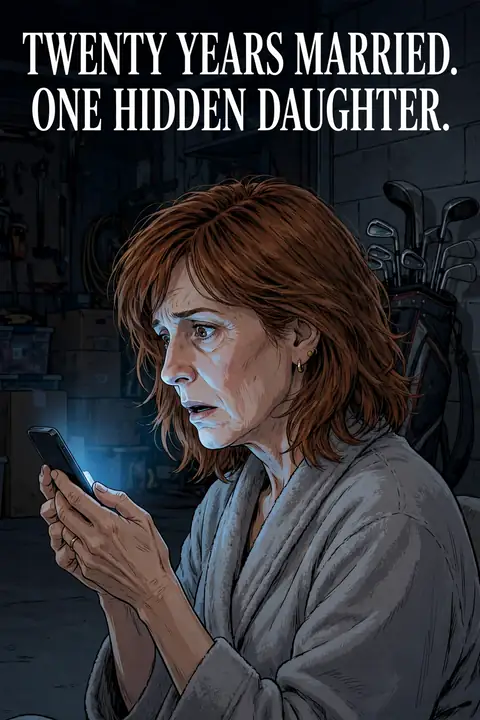
I should have been more careful. I’d logged into my email on the family computer in the den two weeks earlier, to print a work schedule, and I’d never logged out.
Lorraine didn’t say anything. That should have warned me. For eleven days, she was almost nice. She made me a grilled cheese once. Kayla canceled two dress fittings and went “on a girls’ trip to San Diego.”
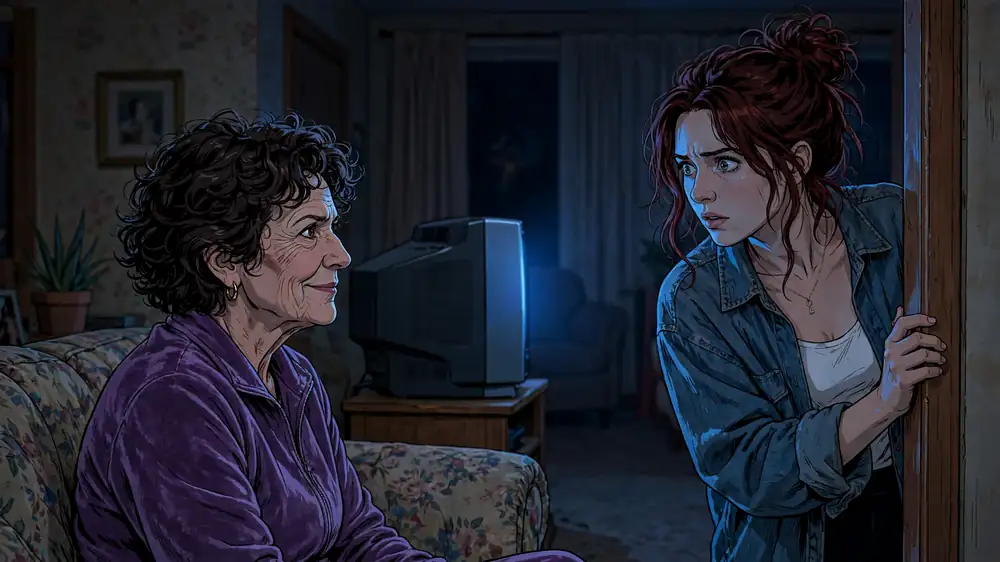
On the twelfth day, I came home from a double, and the whole family was in the living room in front of the television. Even Gary.
Lorraine turned and smiled at me. The first real smile I’d ever seen her give me.
“Sit down, Mara,” she said. “You’ll want to see this.”
On the screen, a news anchor in a red suit stood in front of a pair of tall iron gates in La Jolla.
“…a stunning development tonight in one of California’s most famous cold cases. After twenty-six years, the Halloway family has confirmed that a private DNA test has identified their missing daughter, Eleanor…”
The picture changed.
It was Kayla. In her white blazer. Being hugged by a silver-haired man on the steps of a mansion. Crying perfectly, without smudging her mascara.