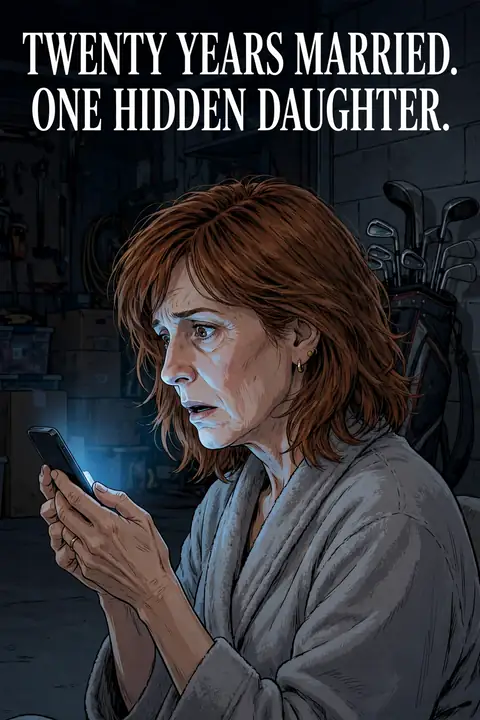
Chapter 3: Three A.M.
I didn’t scream. I don’t know how I didn’t.
I sat completely still with his hand around my fingers. It wasn’t a reflex. Reflexes are quick. This was slow and deliberate, and it held on.
“Elliot?” I whispered. “If you can hear me, squeeze twice.”
Nothing. Then, after a long time: once. And again.
I put my forehead down on the blanket next to his hand and cried as quietly as I have ever cried in my life.
I couldn’t tell Vivian. I couldn’t tell Dr. Lyle. I couldn’t tell the night nurse, who reported to both of them. I couldn’t tell Gail, who would sell the information to the highest bidder before I hung up the phone.
But I could tell Dr. Priya Patel. Her number was printed on the old discharge papers in the binder.
I called her at six in the morning from the garden, where the cameras didn’t reach. I told her who I was. I expected her to hang up. Instead she was quiet for a long moment, and then she said, “They told me he’d been moved to a facility in Switzerland.”
“He’s upstairs,” I said. “On a midazolam drip. They’ve raised it four times.”
She swore. Then she asked me a question that changed everything.
“Nora. You’re his legal wife?”
“On paper.”
“Then on paper, you have the right to request a second medical opinion for your husband. And the guardian can’t block it without a court order.”
So the marriage Vivian had built to control him was the one thing she couldn’t control.
Dr. Patel came that afternoon, in jeans, carrying a tote bag, introduced to the staff as my friend from nursing school. She examined him for twenty minutes with the door locked. When she was done, her face was white.
“There’s no medical reason for this drip,” she said. “None. We start tapering tonight. Slowly. You’re the one who’ll watch him.”
Nobody checked the IV pump at night except me. Dr. Lyle came on Mondays. The night nurse slept from one to four in the room next door; I could hear her snore through the wall. Dr. Patel lowered the rate a little each evening and wrote everything down in a notebook she kept in her tote bag.
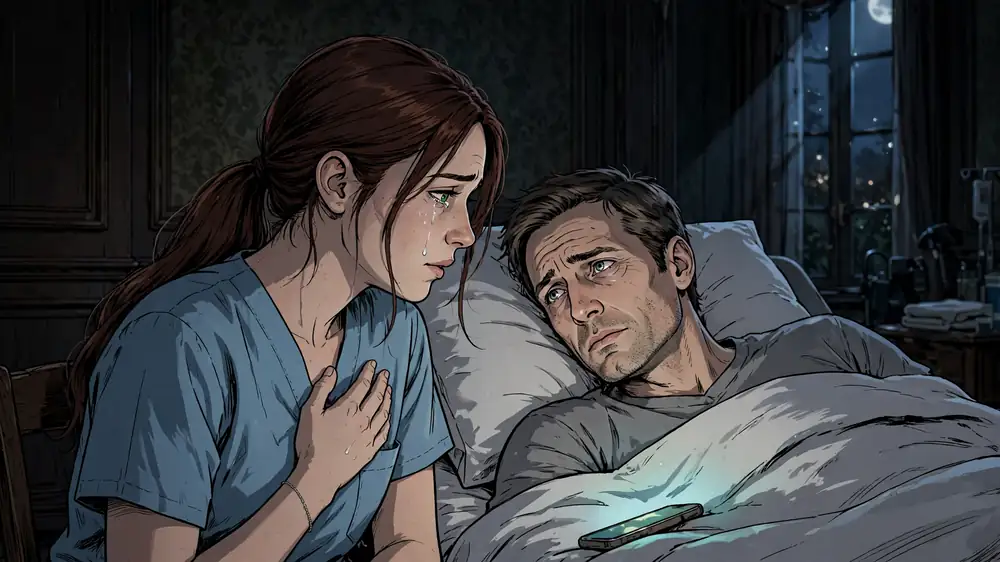
On the fourth night, at three in the morning, I was reading to him from Monte Cristo by the light of my phone. The part where the prisoner hears scratching through the wall of his cell and realizes he isn’t alone.
I looked up from the page.
His eyes were open.
They were pale blue, bluer than in the photos. They were wet. They weren’t wandering the way some patients’ eyes wander. They were looking at me.
His lips moved. No sound came out. He tried again. His voice, when it came, was a dry crack, like a door that hadn’t been opened in a long time.
“Nora.”
He knew my name. Nobody in that house had ever said my name in front of him except me.
“You can hear me,” I whispered. “You’ve been hearing me.”
“Every night.” A long breath. “The book. The lotion. All of it.”
I didn’t know I was crying until a tear landed on his wrist.
“I have to tell Dr. Patel. I have to call—”
His hand tightened on mine. It was weak, but it was urgent.
“Don’t tell Vivian,” he said. “Let her think I’m asleep.”
“Elliot, she’s been—”
“I know what she’s been doing.” His eyes closed for a second, then opened again, and there was something in them that made the hair on my arms stand up. “She comes at night. When you’re gone. She sits right there and talks to me. She thinks I’m furniture.”
“What does she say?”
He swallowed. It took him a long time.
“Last week she said, ‘If he wakes up before Friday, have Lyle raise the dose.'” He looked straight at me. “And then she said, ‘If he still wakes up, I’ll handle it myself.'”