Chapter 1: Nothing But Medical Bills
“To Brooke’s new kitchen,” Mom said, and lifted her wine glass. “And to the strongest girl I know, who finally has a room she can breathe in.”
Everybody clinked. Dad. Brooke. Brooke’s husband, Mark. Aunt Lorraine, who’d driven in from Dayton for Sunday dinner. I clinked too, because that’s what I do.
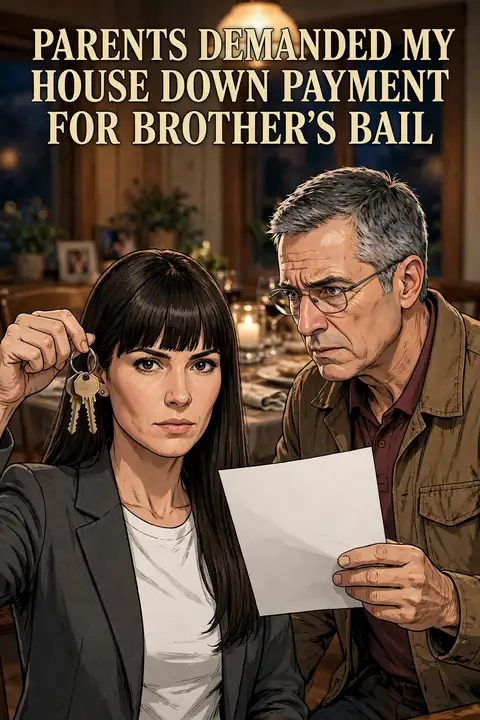
There was an envelope in my purse, folded in half. My student loan statement. It had come Friday. Remaining balance: $38,214.06. I’d been paying on it for twelve years, two jobs for most of them, and I had brought it to dinner because I’d made a stupid decision in the car.
I was going to ask.
Not for money. Just for help refinancing. Dad knew a guy at the credit union. That was all.
“The quartz alone was eleven thousand,” Brooke said, pressing a hand to her chest like it hurt her to say it. “I told Mom it was too much.”
“Nothing is too much,” Mom said. “You’ve had such a hard year, sweetheart.”
Brooke’s hard year was a kitchen remodel. Before that, it was a wedding. Before that, it was a private college in Ohio with a lake and a rowing team, all four years paid in full. Before that, it was being thirteen and having a sensitive stomach, which meant I got the top bunk and the chores.
Brooke is three years older than me. She’s been fragile my whole life. It’s the most expensive thing about her.
I waited for dessert. I waited until Aunt Lorraine went to the bathroom and Mark took a phone call on the porch. Then I put the envelope on the table, right next to the lemon bars.
“I’m not asking for anything big,” I said. “Just a co-sign. Or an introduction to Dale at the credit union. The rate is killing me.”
Mom looked at the envelope like it was a dead mouse.
“Hannah. Not at Brooke’s dinner.”
“It’s Sunday dinner.”
“It’s a celebration.” She lowered her voice. “Brooke needs us more right now. You’ve always been the strong one. You’ll figure it out. You always do.”
You always do. Twelve years of double shifts and a used Corolla with a door that only opens from inside, and that was the review.
Brooke reached over and squeezed my wrist. “I’m sorry, Han. I know it’s hard.”
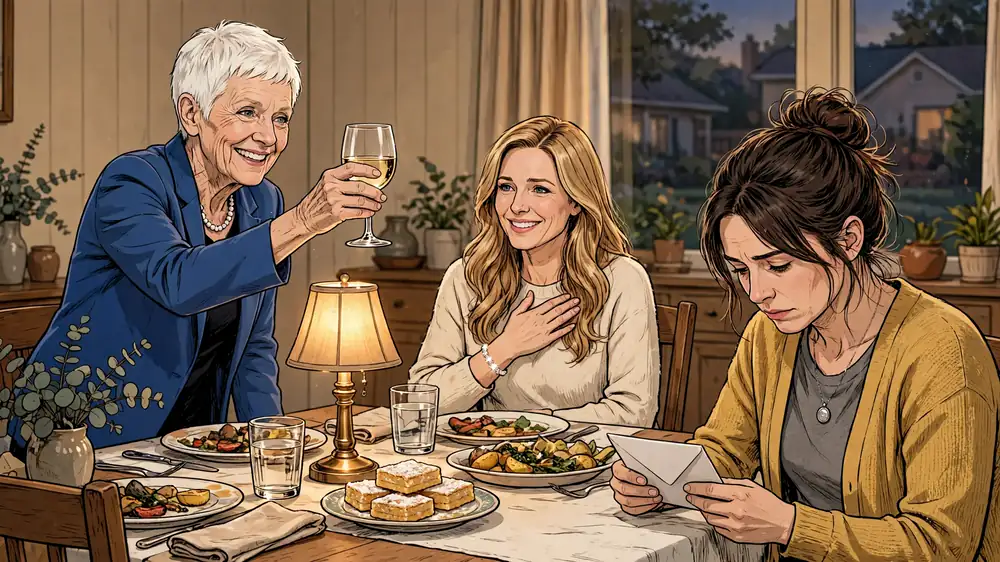
She meant it. That was the worst part. She always meant it.
I picked the envelope back up. My fingers found the locket at my throat without asking me, the old silver one with the scratched clasp. Grandma Ruth’s. She’d pressed it into my palm the week before she died, when I was sixteen and she weighed ninety pounds and I was the one who sat with her every night after school, because Mom said hospice “wasn’t her strength.”
“Grandma would’ve helped me,” I said. I didn’t plan to say it.
Dad set his fork down. Dad doesn’t talk much. When he does, it lands.
“Your grandmother,” he said, “left nothing but medical bills. Your mother and I paid every one of them. So don’t use her to guilt this family.”
The room went quiet. Brooke stared at her plate.
“Okay,” I said. “Sorry.”
Then Mom smiled, bright as a switch. “Actually, you can help us. The retirement party’s in October, and we’re listing the house in the spring. Somebody has to clear out that attic before the realtor sees it.”
“Mom, I work Saturdays.”
“Brooke can’t do stairs with her back, honey. You know that.”
So the next Saturday, after a ten-hour shift at the dental office, I was on my knees in my parents’ attic in the August heat, under one bare bulb, surrounded by forty years of boxes.
Christmas lights. Baby clothes, all labeled BROOKE. Tax returns in banker’s boxes. And behind the furnace duct, wedged against the wall like somebody had wanted it to be hard to reach, a gray file box with masking tape across the lid.
The tape said MOM — PAPERS.
Mom’s mom. Grandma Ruth.
I peeled it back. On top was a long cream envelope, gone yellow at the corners, sealed once and slit open since.
Across the front, in the shaky, slanted handwriting I’d read off a hundred grocery lists, it said:
For Hannah. When she is grown.